In this episode, we sit down with staff from St Patrick’s Primary School Bega, a school that has embraced the Catalyst initiative to transform teaching and learning. From instructional programs to leadership strategies, we explore how this school has aligned its practices to create a knowledge-rich, student-centered environment.
School-Wide Impact
Catalyst Learnings
How Catalyst has influenced school-wide practices.
Implementation of instructional programs: Reading Mastery, Spelling Mastery, InitialLit, and CMC supplemented with units developed in partnership with Ochre.
Emphasis on a knowledge-rich curriculum: Teaching deeper, not broader, while meeting outcomes.
Curriculum beyond DI Programs
School Routines & Behaviour
Creating Consistency
Aligning expectations around routines and behaviour.
Tools and strategies: Behaveability (Ian Luscombe), scripted routines
Teaching Practice
Teachers share their experiences and reflections on Catalyst’s impact.
Good Shepherd Primary School serves students from diverse and multicultural backgrounds in Canberra. The school has transitioned from an inquiry-based approach to teaching to Catalyst’s focus on Direct Instruction and Explicit Instruction, and staff are seeing strong results from the change.
At Good Shepherd, Catalyst supports equity in learning
Prior to Catalyst, Good Shepherd adopted a student-led approach where children where taught with an inquiry-based model. Current research suggests that students benefit most from this approach when they have existing content knowledge to draw on. For this reason, Catalyst focuses on a ‘knowledge-rich curriculum’ and ensuring every student is explicitly taught the skills they need.
“We can now see that every student is getting the same thing, and one class isn’t missing out on, for example vocabulary or text level writing.” (Classroom teacher)
The Catalyst approach now taken at Good Shepherd is about giving every student the same opportunity to succeed. A strong message from leadership about equity resonates with teachers, who recognise the importance of this – not just at their school – but for every child in the system.
“The biggest conversation I would have with those new teachers is about equity.“ (School leader)
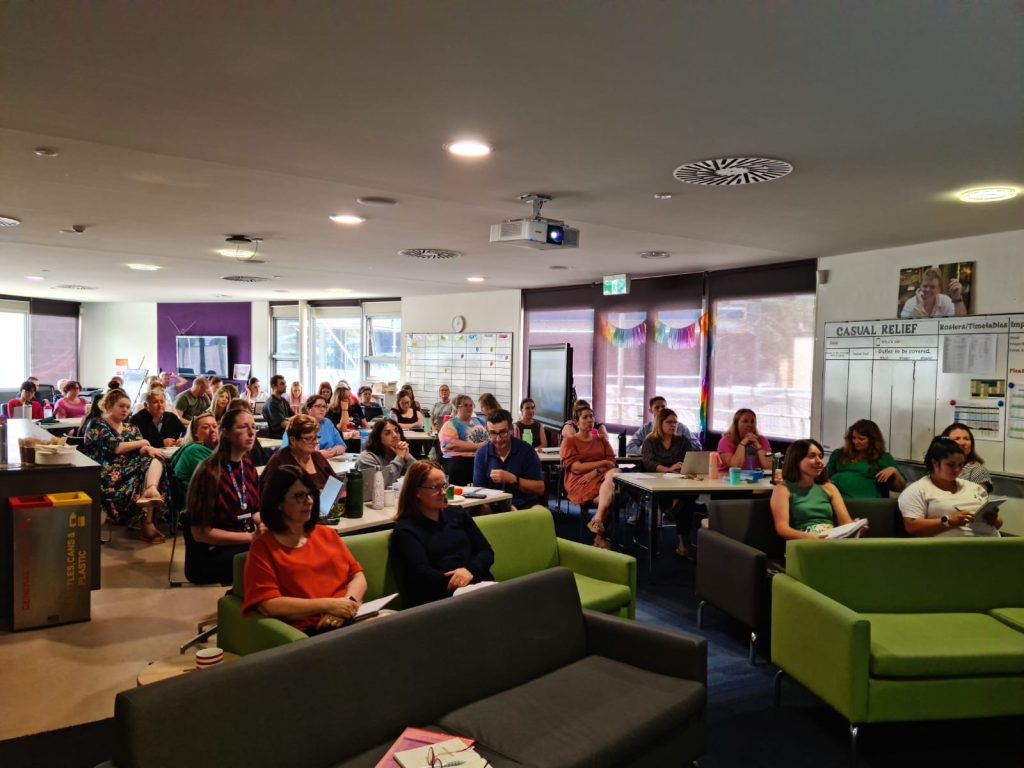
Teachers work in teams to bring this approach to life. Weekly two-hour meetings are the key mechanism for consistency, with all staff in a given year level planning together to ensure they are delivering the same content. Teachers know when and how to adapt the shared plan, when needed, to best support the children in their particular class.
The new Principal identifies the importance of student assessment
While the school has undergone a leadership change in 2024, the new Principal has maintained a strong focus on Catalyst. Data use across schools is unlocking new possibilities for teaching, and Good Shepherd is keen to be at the forefront.
The Principal identifies, “We’re really evolving a new language around assessment at the school”.
The approach to data use and assessment spans both sophisticated adaptive and diagnostic testing, to systematically using miniature whiteboards with students in classrooms. The latter is a Catalyst strategy that gives teachers instant feedback on how well all students are grasping what is being taught. It means teachers get the information they need, without students constantly doing tests.
“The biggest change is using data to inform our teaching practices. We’re collecting data more consistently. And just even the use of whiteboards we collect more data rather than relying only on formal assessments…And trusting that that is actually a good way of informing our teaching practices.” (Classroom teacher)
Teachers are motivated by the results they are seeing students achieve
Ask any teacher at Good Shepherd about the impact of Catalyst, and they will tell you what they are seeing in their classroom, and how this motivates them to keep getting better and better.
“The results are really what’s driving us, that we can actually see these programs are working… We can see our little people are growing.” (Classroom teacher)
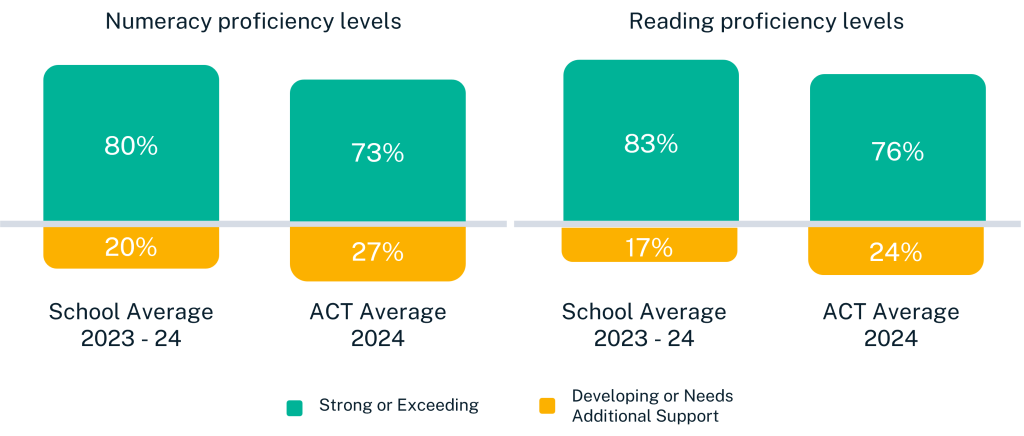
Good Shepherd NAPLAN results – Year 3 and 5 combined
This improvement, and the way the school supports all students can also be observed in NAPLAN.
Empowering students to take the next step in their learning
In reflecting on the next steps for the school in 2025, there is a strong emphasis on how students can feel that they ‘own’ their assessment data (in an age-appropriate way). This aligns with research about the importance of student agency, motivation and wellbeing, and the types of feedback that best help students learn. In practice, this might look like conversations with students after tasks to help them understand the specific next step for them in their learning.
External Analysis delivered by
To measure the outcomes and impact of the Catalyst program, CECG engaged Deloitte Access Economics (DAE) for an external analysis. Starting in January 2022, DAE evaluated Catalyst’s effectiveness on schools. Their final report includes six case studies from diverse schools in the Archdiocese, highlighting academic achievements for students and advocacy impacts for teachers, along with areas for improvement.
In this episode, CECG teachers Zoe Cawdron and Lauren Maher unpack the impact of Catalyst on their teaching practice, discussing:
Implementing effective classroom routines, attention signals, and engagement norms
Leading from the classroom through their Sharing Best Practice vocabulary presentation
Using assessment data to tailor instruction, support struggling readers, and extend learning opportunities
This episode offers practical strategies for educators seeking to enhance student engagement and learning outcomes through evidence-informed approaches.
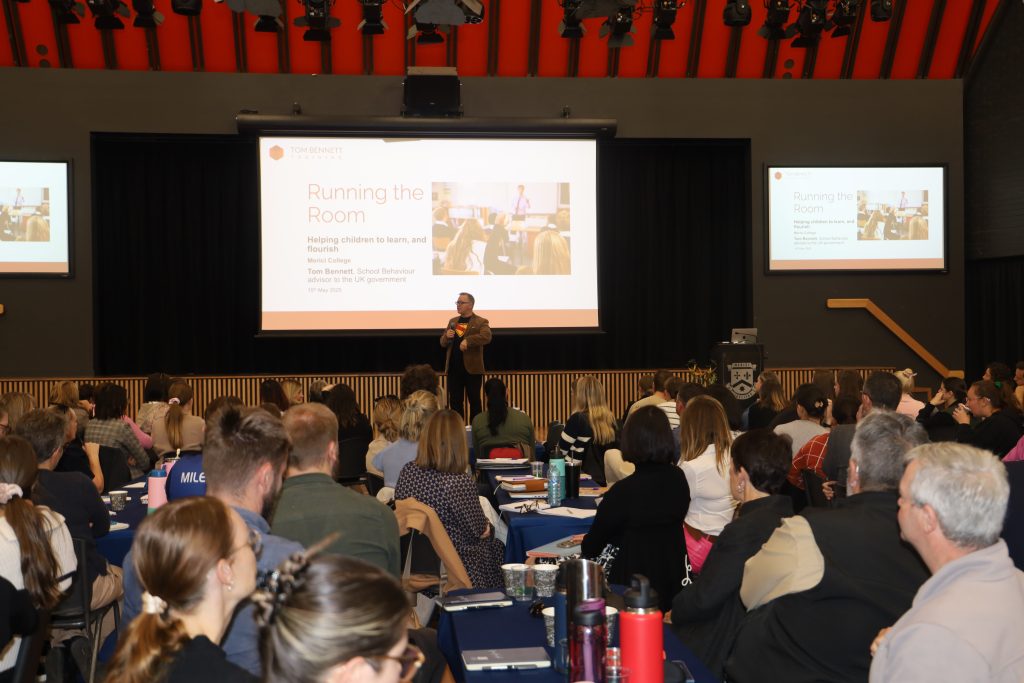
Last week, 148 educators from across the CECG system, including colleagues from Independent and Directorate schools, gathered for a valuable day of professional learning with international classroom behaviour expert Tom Bennett.
A leading voice in evidence-based teaching, Tom draws on over a decade of classroom experience in London and his ongoing work supporting educators to create calm and effective learning environments. Since founding researchED, he has worked with educators across the world to develop research literacy and practical strategies for improving behaviour in the classroom. In recognition of his contributions to education, Tom was awarded an Order of the British Empire in 2022.
His workshop, Running the Room, focused on the critical role that behaviour, culture and routines play in creating orderly and productive classrooms. His insights reflected much of Catalyst’s Bold Goal ‘High Impact Teaching Practice is visible in every classroom’ and further highlighted that effective classroom management is key to improving academic outcomes, student wellbeing and lifelong success.
“Children thrive when we create clear expectations and teach the behaviours we want to see, just as we teach knowledge and skills.”
Building a positive culture
Tom reminded participants that every classroom is shaped by its culture, or the “how we do things around here.” He emphasised that teachers lead this work by –
Setting strong norms: Establishing and reinforcing the behaviours that are expected and celebrated.
Embedding consistent routines: Practicing key behaviours until they become automatic, helping students focus on learning.
Building positive relationships: Holding high expectations and showing a genuine interest for every student.
Behaviour management
Rather than reacting to misbehaviour, Tom emphasised the importance of explicitly teaching and practicing the behaviours we want to see. From how students enter a classroom to how they transition between activities, these routines provide the structure that supports learning.
He also reinforced the role of consequences as feedback, helping students understand that their actions have meaning and impact. While intrinsic motivation is the goal, extrinsic support is often needed to build the habits that lead to lasting change.
A shared commitment
This professional learning session reinforced to our CECG attendees that behaviour is not a separate agenda but an essential part of effective teaching. By setting clear expectations, embedding consistent routines and nurturing strong relationships, we create the conditions for every student to learn, grow and succeed.
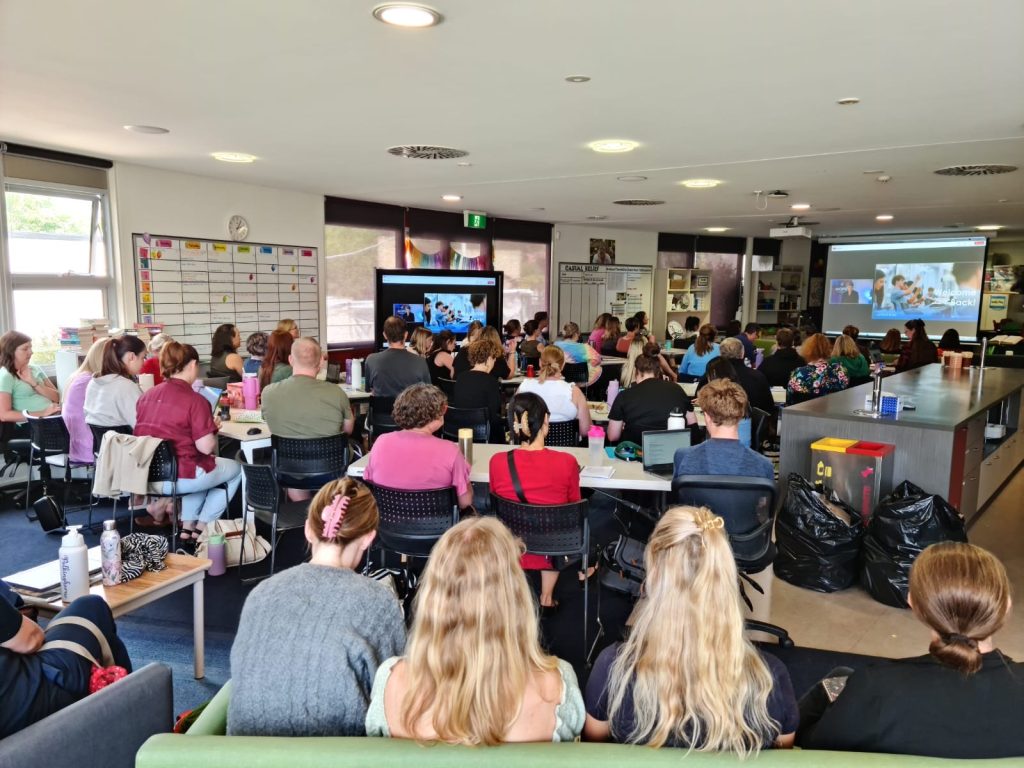
Catholic Archdiocese Canberra and Goulburn Education Limited have kicked off 2025 with System Day, bringing together all staff members online from across the system to reinforce and strengthen the journey with Mission and Learning. With a continuing focus on deepening teacher’s knowledge of how students learn and how best to incorporate that learning into their classroom practice to transform student lives through learning.
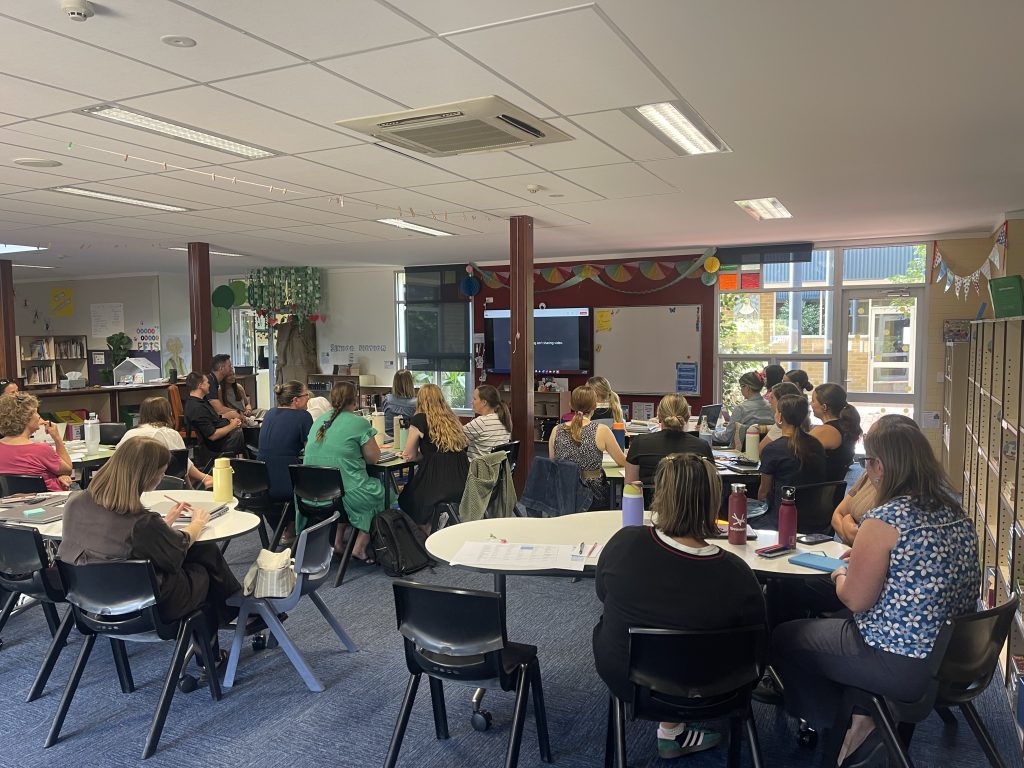
With over 2,000 Principals, teachers and support staff dialing in online from their school, in groups and individually, with the opportunity to engage, learn and reflect. Guided by leadership and educational experts, recognition was given to the evidence and impact of Catalyst to date, with a focus on practical strategies and techniques that educators can adopt to enhance student learning.
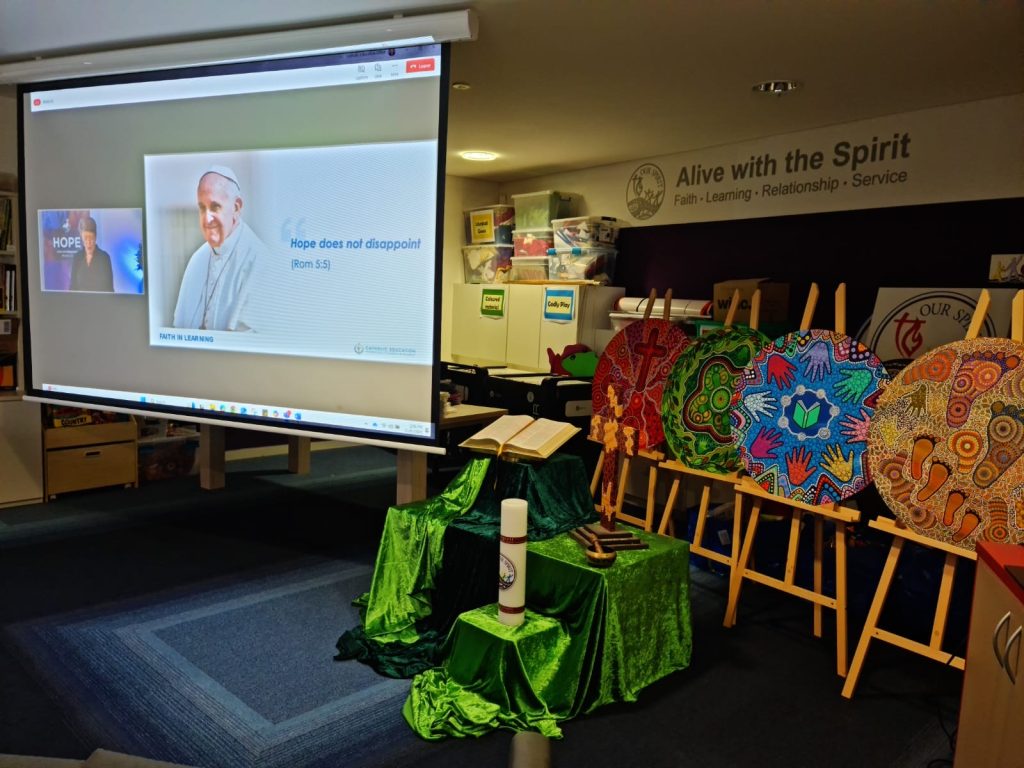
Guided by Pope Francis’s theme for the Year of Jubilee: Pilgrims of Hope, Archbishop Christopher Prowse and Interim Executive Director Pam Betts reinforced the Mission and direction of Catholic Archdiocese Canberra and Goulburn Education Limited for 2025, with emphasis on the role of faith, leadership, and hope in shaping the future of learning.
“As Catholic educators, we are preparing our students not just for academic success but for lives of purpose, integrity, and faith.
Through Catalyst, we are equipping our schools with the tools and strategies needed to foster this hope-filled future, ensuring that every student has the opportunity to thrive.”
Pam Betts, Interim Executive Director
Their addresses underscored the importance of collaboration and a shared purpose across the Archdiocese, inspiring educators to continue making a meaningful impact in their schools and communities.
Event Highlights
Guided by esteemed MC Genevieve Jacobs AM, and featuring thought-provoking keynotes from Natalie Wexler and Professor Daniel Willingham, System Day 2025 was an opportunity to begin the year inspired and empowered to continue to improve student learning across the Archdiocese.
Closing the Knowledge Gap with Natalie Wexler
Education writer and author Natalie Wexler delivered an engaging session to deliver content-rich learning to improve literacy outcomes.
With insights grounded in the Science of Reading, Wexler explained that improving literacy requires a change in how we approach comprehension and writing. She challenged traditional reading comprehension methods, advocating for a shift from isolated skill drills to deep, knowledge-building instruction. With a clear path forward, she highlighted the promising results from our schools with implementing the Catalyst approach, demonstrating the impact of High Impact Teaching Practice (HITP) on improved student learning.
Developing Independent Learners with Professor Daniel Willingham
Cognitive scientist, Professor Daniel Willingham, explored how educators can empower students to take ownership of their learning. He outlined research-backed strategies for building independent study habits, including effective note-taking, managing distractions, and committing key concepts to memory.
Willingham emphasised the need for Explicit Instruction in these skills, ensuring that students, as they grow older, become independent learners who can avoid distraction, commit content to memory, take notes, judge when they have studied enough, avoid procrastination, and more. He shared tools to create students responsible for their own development, to ensure long-term academic success.
The Future of Learning is Bright
Teachers and staff closed the day affirmed with the journey to date through Catalyst and motivated to continue the momentum forward to refine their practice to positively impact student learning. The panel of speakers also reinforced the critical role of Catalyst’s evidence-based approach, highlighting its value not just for our system, but as a model for others to learn from both nationally and internationally.
Teachers undertook a HITP Survey to reflect and evaluate their learning through Catalyst. With over 1500 responses it was clear that teachers value the system strategy, resources, support and professional learning.
88.6% HITP part of my everyday practice
92.4% believe HITP is worth effort and focus
79.3% believe HITP has increased student engagement and learning
75.2% HITP has improved my teaching and I wouldn’t go back
83.3% would continue using HITP even if it wasn’t a formal requirement
System Day has laid the groundwork for 2025 to continue to foster Faith in Learning through a united system that is stronger together.
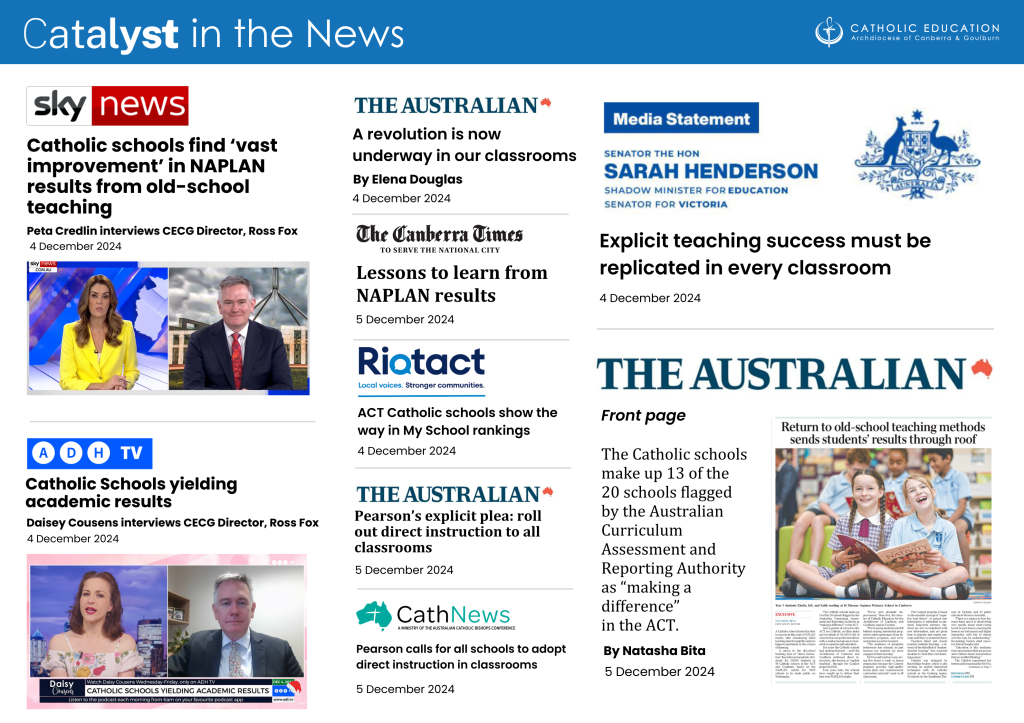
CECG schools across the ACT have been praised for notable improvement in the latest NAPLAN results released this week on the My School website.
The Australian Curriculum Assessment and Reporting Authority (ACARA) has identified the Top 20 Schools Making a Difference in each state and territory, comparing year on year data for 2023/24. Of the 20 top schools in ACT identified, 13 Catholic Education Canberra-Goulbourn (CECG) schools were recognised, a milestone widely acknowledged by media sources this week and celebrated as a clear endorsement of the power of High Impact Teaching Practice and explicit teaching.
Following its launch over four years ago, Catalyst has transformed how teaching and learning is approached in CECG schools. By implementing High Impact Teaching Practice, grounded in Science of Learning and the Science of Reading, schools have seen positive growth and improvement in literacy and numeracy outcomes.
CECG Director Ross Fox emphasised the program’s ongoing potential in an interview for RioTact –
“We’re excited by these results, but we know there’s more we can achieve. The advancements in early years learning are encouraging, and we’re confident they’ll lead to sustained higher achievements over time.”
Following the success of CECG schools, Good to Great Schools Founder and Co-Chair, Noel Pearson called for all schools to adopt explicit instruction in their classrooms. In an interview for The Australian, he acknowledges all challenges schools face but emphasised,
“If you don’t get the instruction right, you’re going to fail anyway.”
In an interview for Riotact, Dr Lorraine Hammond, a pioneer of the Science of Learning teaching movement, has underscored the importance of explicit teaching in transforming classroom practices in light of the recent literacy and numeracy inquiry.
The article highlights the adoption of High Impact Teaching Practice by Catholic Education Canberra Goulburn through the Catalyst program as the benchmark for reform. Through embedding a scientifically backed, data-driven methodology, significant improvements in student outcomes have been witnessed across the Archdiocese and these results cannot help but attract attention from government schools, creating a compelling case for wider adoption.
Dr Hammond recognises the barriers and resistance to government school and system reform, despite the weight of evidence behind High Impact Teaching Practices. She urges the Directorate to bypass those teachers attached to the past and start with a “coalition of the willing”, to build momentum towards positive change.
“Because teachers are altruistic and they want the best, it just creeps very, very quickly, because then parents are like, ‘Well, hang on, what’s happening at that school down the road, they’re doing this. Why aren’t we doing that, too?’”.
In addition to best practice teaching, Dr Hammond believes that routine and an orderly working environment are a key contributor to success. The CECG approach creates a structured environment for learning, with classroom architecture designed to ensure that students are ready and willing participants and to ensure that teachers achieve whole class engagement.
This approach is particularly important when it comes to literacy. “To get to 100 per cent reading, you’ve got to go through the bottom 20 per cent, so this is going to help everybody. If we don’t go through that bottom 20 per cent they’re never going to learn how to read. That’s the position that Catalyst took as well.”
Australia needs a reading revolution. We need to transform the way we teach reading in school, so that every Australian child gets their best chance in life. This report shows how to do it.
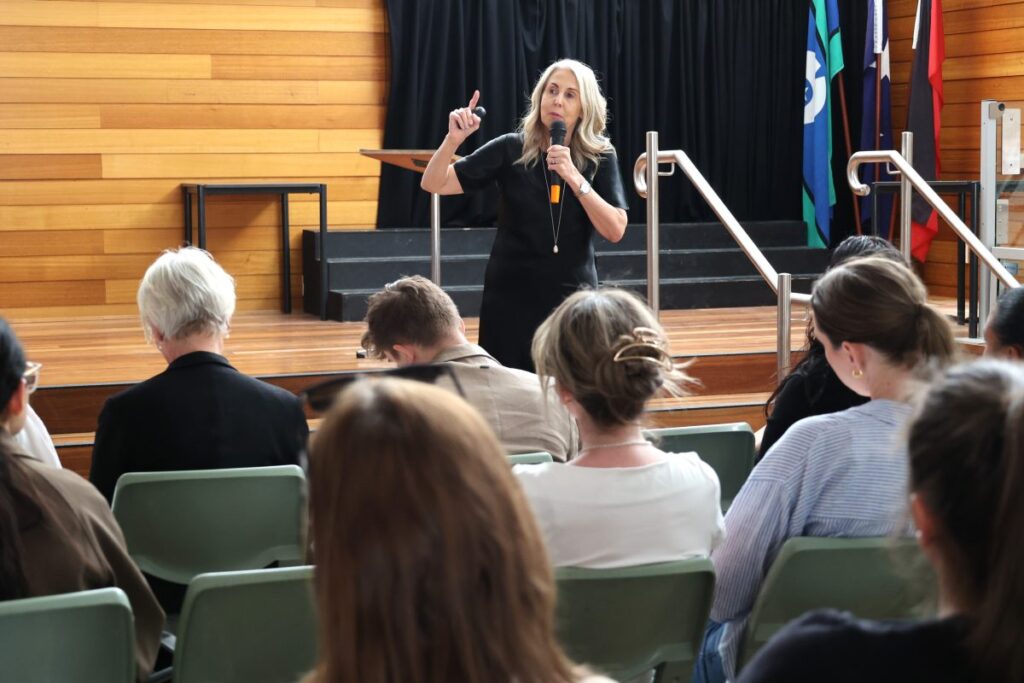
Professor Pamela Snow, La Trobe University, addresses CECG Principals at Catholic Leaders’ Day, October 2022 on leading science of reading teaching in their schools